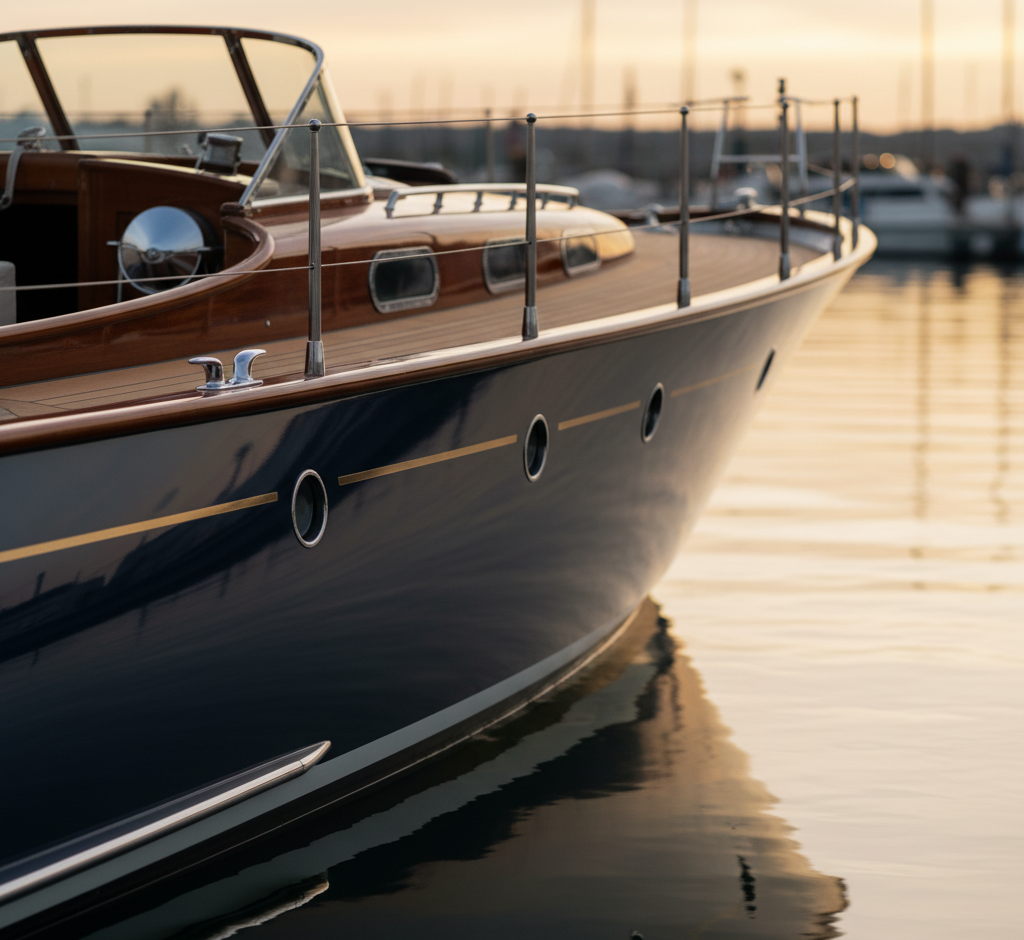
Professional yacht detailing process covering ceramic coating, hull restoration, and interior care for Nassau and Suffolk County yacht owners.
Share:
Summary:
You’ve invested hundreds of thousands—maybe millions—in your yacht. Yet every day it sits exposed to Long Island Sound’s harsh saltwater environment, UV rays are breaking down your gelcoat, and salt crystals are working their way into every surface.
The difference between a yacht that holds its value and one that doesn’t often comes down to how well it’s protected and maintained. Strategic protection solutions—such as professional window tinting services for enclosed cabins and bridge areas—help reduce UV penetration, minimize interior fading, and lower heat buildup that accelerates material degradation.
You’ll discover exactly what separates amateur detailing from the professional-grade process that actually preserves your investment, starting with understanding why location and expertise matter more than you might think.
Boats and yachts face conditions that would destroy automotive paint in months. Salt spray, constant UV exposure, and temperature extremes demand specialized protection that goes beyond what works on land.
Long Island Sound presents unique challenges that generic detailing simply can’t handle. North Bay Shore waters demand equipment that handles salt spray, constant vibration, and temperature extremes. Your yacht needs protection specifically engineered for this marine environment.
We’re based in Port Jefferson Station, NY, serving discerning collectors throughout Long Island who refuse to compromise on quality, security, or expertise when it comes to their most valued assets.
Without any protection to the surface, salt will be able to sit on the surface and get into the pores of the paint. Over time, this is one of the major causes of oxidation. Most yacht owners don’t realize this process starts immediately after every trip.
Oxidation is a chemical reaction that occurs when your boat’s gel coat or paint reacts with oxygen, UV rays, and environmental pollutants. It often manifests as a dull, chalky appearance on the hull’s surface, making your boat look old and neglected. The severity of oxidation can range from light surface discoloration to deep, stubborn oxidation that requires professional attention.
The problem compounds quickly in Nassau and Suffolk County waters. Traditional marine waxes last only weeks in harsh conditions, requiring constant reapplication. You end up spending more time maintaining your yacht than enjoying it.
What makes this worse is that most boat owners don’t see the damage until it’s extensive. Before any restoration process, gloss meter readings can be very inconsistent, with readings as low as 38.9 and highest readings of 75.3 on the transom. By then, you’re looking at significant restoration costs instead of simple prevention.
The solution isn’t more frequent waxing—it’s professional-grade protection that actually works in saltwater environments. Marine-grade ceramic coatings are specifically formulated for gelcoat and marine paint systems. They create a barrier that prevents salt crystallization, resists UV degradation, and maintains hydrophobic properties even after constant water exposure.
The process of yacht ceramic coating protection is laborious and our team must be diligent to deliver quality results. When working on a yacht or boat, the process at a minimum is 5 steps and can range to 8-10 steps depending on the condition of the surface.
Professional yacht detailing goes far beyond what most people imagine. Exterior yacht detailing includes hull cleaning and polishing to remove oxidation, stains, and water spots; gelcoat restoration to restore faded and dull surfaces; teak deck treatment to clean, sand, and seal teak wood; and metal and chrome polishing to prevent corrosion and enhance shine.
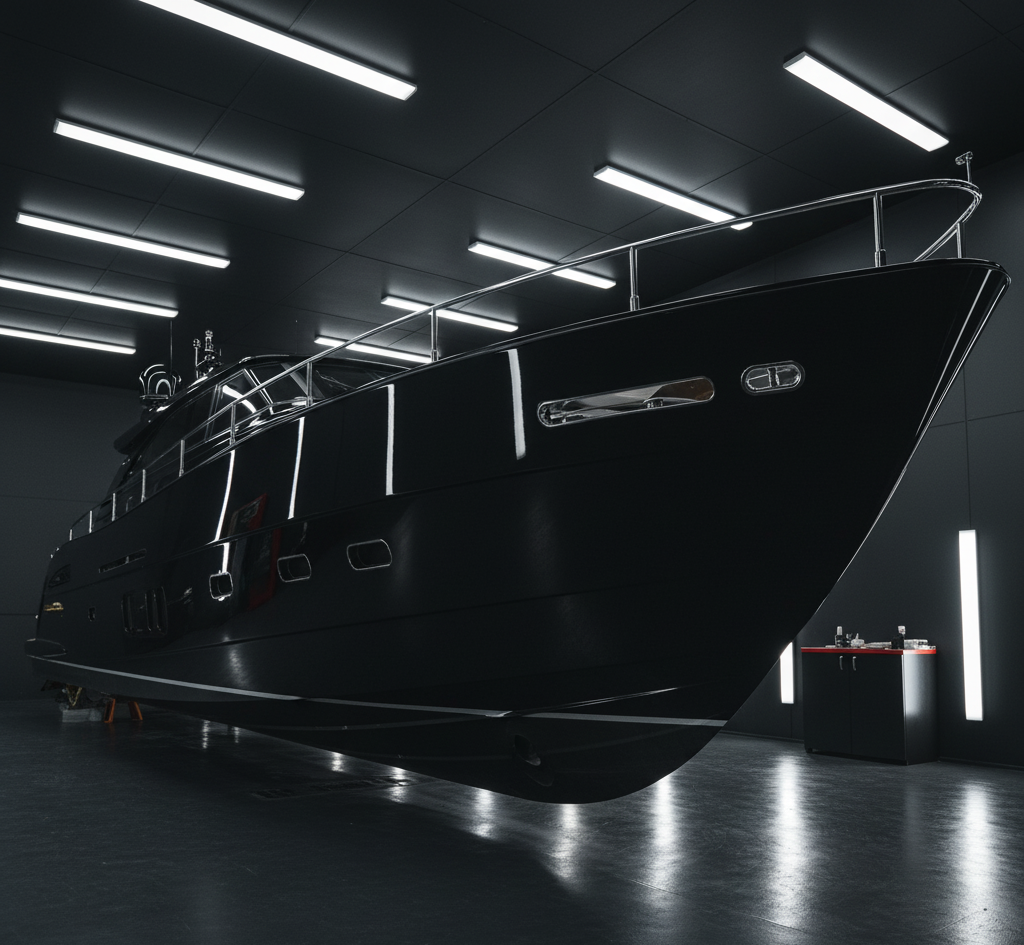
Interior yacht detailing includes deep cleaning of carpets, upholstery, and surfaces. But here’s what separates professional work from amateur attempts: Professional grade application in controlled environment ensures perfect bonding and optimal curing conditions.
The assessment phase alone requires expertise most people don’t have. You need to assess the level of oxidation on your boat’s hull. Light oxidation may appear as a faint chalky residue, while severe oxidation looks much duller and may have visible pitting or rough spots. Get this wrong, and you can actually damage your gelcoat permanently.
Improper compounding or polishing can lead to uneven surfaces, swirl marks, or further damage to the gel coat. Experienced teams have the expertise and equipment to remove oxidation safely and effectively. This is why DIY approaches often create more problems than they solve.
The ceramic coating application itself requires precise conditions and timing. Jade Graphene Pro is a clear, non-yellowing, liquid nano-ceramic coating. When cured, the technology becomes a rigid, flexible super-slick glass shield, bonding to and protecting the surface of your hull.
Want live answers?
Connect with a Legacy Motors & Marine expert for fast, friendly support.
Understanding each step helps you evaluate whether a detailing service actually knows what they’re doing. Properly removing oxidation involves several key steps, from cleaning and compounding to polishing and sealing.
Each step builds on the previous one. Skip a step or do it incorrectly, and the entire process fails. Like a new paint job, flaws and imperfections don’t get covered up. Professional preparation may represent 80% to 90% of the time involved in the job.
Our process starts with comprehensive assessment and ends with protection that actually lasts years, not weeks.

Step 1: Professional Assessment
First, we assess your boat and discuss exactly what you need. No vague estimates or handwritten quotes. You get a detailed proposal that covers equipment, installation, and timeline. This determines which restoration approach your yacht actually needs.
Step 2: Comprehensive Hull Cleaning
Before addressing oxidation, it’s crucial to start with a clean surface. We use marine-safe soap and water to wash away dirt, grime, salt, and other contaminants that can interfere with the oxidation removal process. We pay special attention to removing any algae, barnacles, or scum that may be clinging to the hull.
Step 3: Oxidation Assessment and Removal
Entry level details include a single grade of the least aggressive compound or polish to eliminate any oxidation in your boat’s gel coat or paint, followed by applying a premium polymer sealant to add lasting protection to your boat’s new luster. More severe cases require multi-stage correction.
Step 4: Surface Correction and Polishing
Multi-stage buffing and polishing truly brings your surface back to its glory. The number of stages can vary based on the degree of oxidation. This step determines the final quality of your yacht’s appearance and how well the protective coating will bond.
Our team understands that rushing these preparation steps compromises everything that follows. Our professional exterior cleaning services ensure your boat’s hull is thoroughly washed and prepped before oxidation removal, using specialized marine cleaning products that effectively eliminate dirt without damaging the gel coat.
Step 5: Interior Deep Cleaning and Conditioning
Saltwater, UV rays, and the elements can quickly damage your boat’s interior surfaces, particularly vinyl seats and upholstery. We clean and apply a UV-protectant treatment that prevents cracking, fading, and mildew growth. Our interior detailing services include thorough cleaning and conditioning using specialized products that protect against salt, sun, and moisture.
Step 6: Metal and Hardware Protection
Metal fittings, railings, and hardware are especially vulnerable to corrosion from saltwater exposure. We clean all metal surfaces and coat them with a corrosion inhibitor or protective polish. This step often gets overlooked but prevents thousands in replacement costs.
Step 7: Ceramic Coating Application
Ceramic coating your boat’s hull provides unrivaled protection and durability, slowing the aging process and adding an unbelievable gloss for up to 5 years. Once treated with a ceramic coating, your boat’s hull will repel water, corrosion, algae, and other contaminants while maintaining a gorgeous, glossy, hard-as-nails finish.
Step 8: Curing and Quality Verification
Before beginning the ceramic coating process, gloss meter readings might range from as low as 38.9 to 75 on the transom. After our process and complete restoration with two coats of ceramic coating, gloss meter readings can reach as high as 97.4. We provide professional verification to ensure the coating has properly bonded.
Step 9: Final Inspection and Maintenance Planning
Before you take delivery, we walk you through every system. You learn how everything works, where important components are located, and how to troubleshoot basic issues. You’re not left guessing how to use equipment you just paid for.
The difference between professional and amateur work shows up in the results. Marine-grade ceramic coatings maintain protection for 18+ months, resist salt crystallization, and prevent UV damage. The initial investment pays for itself through reduced maintenance time, preserved appearance, and maintained resale value. For luxury yachts where appearance and condition directly impact value, ceramic coating is essential protection.
Your yacht deserves protection that matches its value. Your investment in a luxury yacht or boat deserves protection that’s engineered for the marine environment, not adapted from automotive applications.
Ceramic coated boats stay cleaner longer, require less frequent polishing, and require no additional paint protection. More importantly, they maintain the value and appearance that makes yacht ownership worthwhile.
Our 9-step process isn’t just about making your yacht look good—it’s about preserving the investment you’ve worked hard to afford. When you’re ready to protect your yacht with professional-grade detailing and ceramic coating, we provide the expertise and controlled environment your vessel deserves.
Article details:
Share:
Continue learning:
