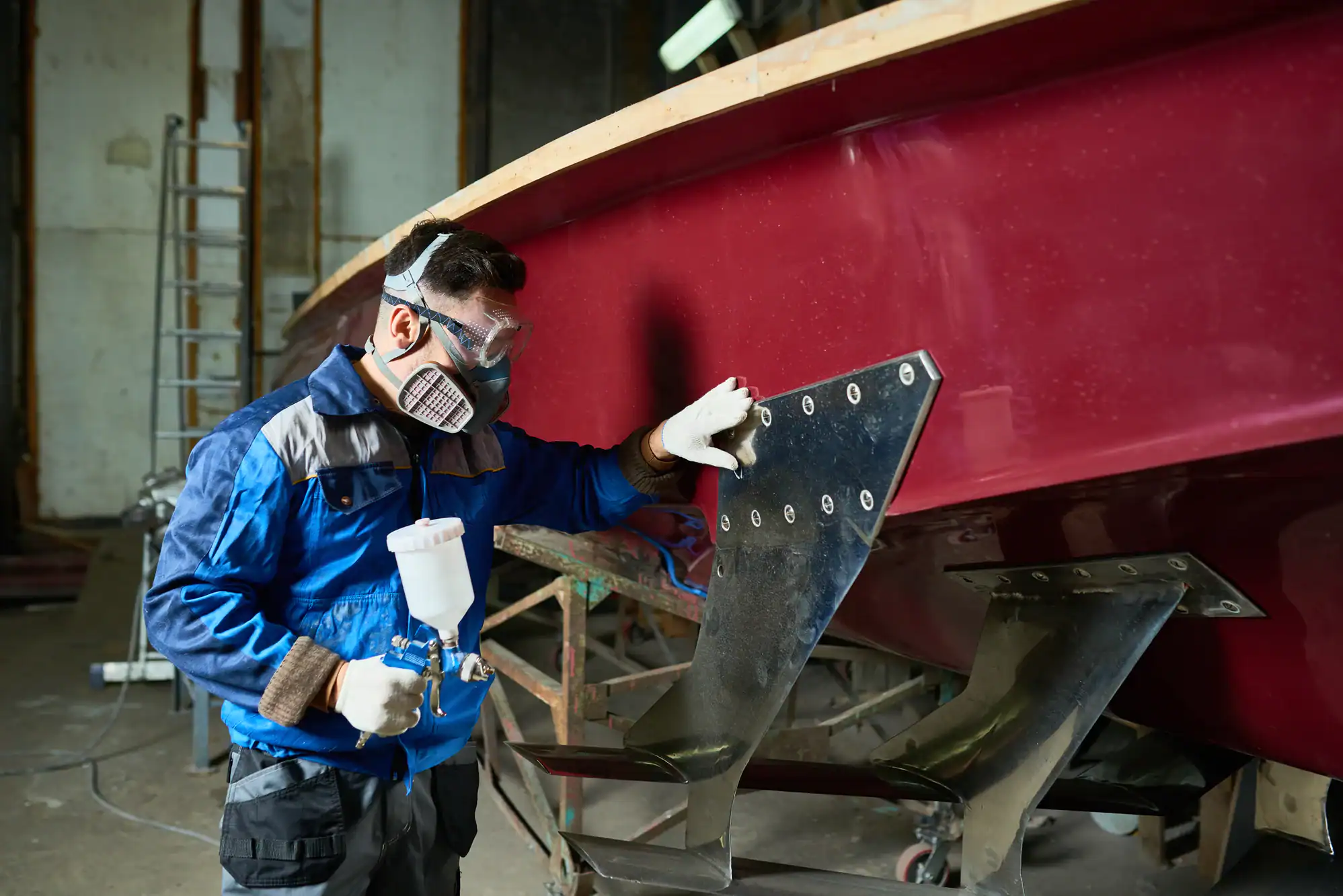
Everything Long Island boat owners need to know about winterization — when to do it, what it covers, and why storage matters more than most people think.
Share:

Summary:
Most Long Island boat owners don’t start thinking about winterization until they feel the first cold morning on the water. By then, the best service providers are already booked solid, and the margin for error is shrinking fast. Winterization isn’t something you want to rush, and it’s not something you want to skip. A single freeze event in an improperly prepared boat can cause thousands of dollars in damage — damage that’s entirely preventable. This guide covers when to pull your boat, what a complete winterization actually involves, and how the right storage setup protects everything you’ve worked to preserve.
The rule of thumb is straightforward: winterize before nighttime temperatures consistently drop below 40°F. On Long Island, that typically means early to mid-October — sooner than most people expect. The problem is that boat owners tend to wait until it feels cold, which puts them right in the middle of the seasonal rush when every marina and service provider in Nassau and Suffolk County is backed up two to three weeks.
If you’re aiming to have your boat properly stored and protected before the first hard freeze, booking in September is the smarter move. The season ends in October whether you’re ready or not.

Long Island sits between Long Island Sound to the north and the Atlantic Ocean to the south, with dozens of bays, harbors, and inlets running through both Nassau and Suffolk County. That geography is what makes boating here so good — and what makes off-season storage more demanding than it is in most other parts of the country.
Salt air doesn’t stop working when your boat comes out of the water. It keeps attacking metal fittings, electrical connections, and engine components throughout the off-season. The humidity that rolls off the Sound and the bay creates real mold and mildew risk inside cabins and storage compartments. The combination of UV exposure, temperature cycling, and salt residue left on gel coat surfaces adds up to visible oxidation and fading by the time spring arrives — if the boat wasn’t properly cleaned and protected before storage.
This is the part of winterization that most guides skip over. Everyone talks about freeze damage — cracked engine blocks, burst hoses, seized cooling passages. That’s real, and it matters. But the slow, cumulative damage that happens over five or six months of Long Island winters is just as costly, and it’s almost entirely preventable with the right preparation and the right storage environment.
Boats stored outdoors under shrink wrap are protected from debris and moisture intrusion, but the wrap does nothing for temperature cycling, salt air corrosion, battery drain, or electronic degradation. A boat sitting in an open lot from November through April is being quietly worked on by the environment the entire time. Climate-controlled indoor storage — with actual temperature and humidity management — is a different category of protection entirely.
For North Shore boat owners in communities like Port Jefferson, Cold Spring Harbor, Huntington, and Stony Brook, this is especially relevant. The proximity to the Sound means salt air exposure is higher than it is for inland storage locations, and the boats being kept in these areas tend to be larger, more complex, and worth protecting seriously.
The short answer: water freezes, expands, and doesn’t care what’s in its way. Engine blocks, cooling passages, hoses, fittings — none of them are designed to accommodate that kind of pressure. A single hard freeze in an improperly winterized engine can cause $5,000 to $20,000 in damage. And if your insurer determines you failed to take reasonable precautions, they may not cover it.
Beyond the engine, there are other failure points that don’t get enough attention. Gear-case lubricant that looks milky instead of clear amber is telling you there’s a seal leak — one that needs to be addressed before the boat goes into storage, not discovered in April when you’re trying to launch. Through-hull fittings that aren’t inspected and documented can develop problems over winter that go unnoticed until you’re back in the water. Batteries left without a tender connection lose capacity over the off-season and often fail entirely by spring, turning the first warm weekend into a trip to the marine supply store instead of a day on the water.
These are the details that separate a professional winterization from a DIY job done from a YouTube checklist. It’s not that the checklist is wrong — it’s that a technician who works on boats every day knows what to look for beyond the list. They’re running a diagnostic inspection alongside the winterization process, catching developing issues before they become expensive ones. That accountability matters, especially for larger vessels and inboard engines where the cost of getting it wrong is significant.
Want live answers?
Connect with a Legacy Motors & Marine expert for fast, friendly support.
A complete boat winterization is not a single task — it’s a sequence of systems, each with its own failure mode if skipped or done out of order. The engine needs to be fogged with oil to prevent corrosion in the cylinders. The cooling system needs to be flushed and treated with marine antifreeze. Fuel stabilizer needs to be added and then the engine run for roughly ten minutes so the stabilized fuel circulates through the entire system — not just the tank.
That’s just the engine. There’s also the lower unit gear oil, the battery, the through-hull fittings and seacocks, the bilge pump, the freshwater system if the boat has one, the interior moisture control, and the exterior protection. Each of those has a right way and a wrong way, and the wrong way tends to show up in March.
Starting with the engine, fogging oil applied to the cylinders prevents internal corrosion during the months the engine isn’t running. The cooling system — raw water or freshwater cooled — needs to be fully flushed and filled with marine-grade antifreeze to protect passages that can’t be fully drained. Fuel stabilizer goes in the tank before the final run, and that run needs to be long enough to get treated fuel into the carburetors or fuel injectors, not just sitting in the line.
The lower unit is one of the most commonly skipped steps in DIY winterization. Draining and replacing the gear oil takes about fifteen minutes, but it also tells you something important: if the oil comes out milky rather than clear amber, there’s water intrusion from a seal leak. That’s a repair that needs to happen before winter, not after. Catching it in October costs far less than discovering it in May.
Seacocks — the valves controlling water flow through the hull — should be cycled open and closed several times to prevent them from seizing over the winter. Any that feel stiff should be lubricated with marine-grade grease. Through-hull fittings should be inspected and their locations documented, ideally with photos. Some insurers now require this as part of a storage inspection.
Inside the boat, moisture is the enemy. Lockers, compartments, and cabins need to be dried out and ventilated. Cushions and fabric should come out if possible. Any standing water in the bilge needs to go, and the bilge pump should be tested before the boat goes into storage. Electronics — chartplotters, VHF radios, fishfinders, autopilot systems — are often overlooked entirely, but they’re among the most expensive components on a modern vessel and are vulnerable to moisture infiltration and freeze damage. Proper electronics winterization is a distinct step, not an afterthought.
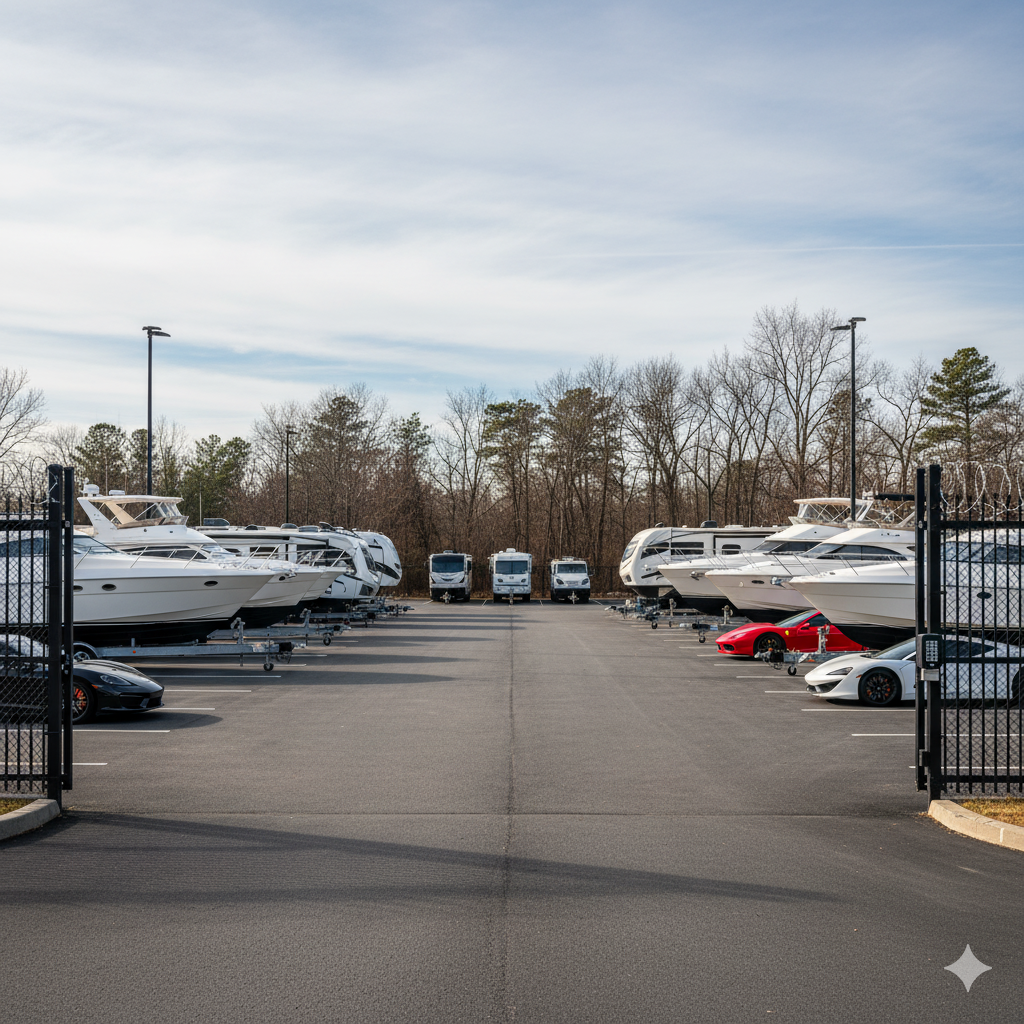
Outdoor storage under shrink wrap is the default for most Long Island boat owners, and it’s not a bad option — it’s just a limited one. Shrink wrap keeps rain, snow, and debris off the boat. It doesn’t regulate temperature, control humidity, protect electronics from condensation, maintain battery charge, or do anything about the salt air that’s working on your fittings and wiring all winter long.
Climate-controlled indoor storage addresses all of those things. Temperature and humidity management prevent the interior cracking, gel coat oxidation, and electronic failure that accumulate over a Long Island winter in an uncontrolled environment. Battery tender systems keep your vessel charged and launch-ready so that when April comes, you’re not starting the season with a dead battery and a to-do list. That’s a meaningful difference in how your spring actually goes.
The other thing worth considering is security. A boat sitting in an open storage yard is a different situation than one in a monitored, access-controlled indoor facility with 24/7 video surveillance and motion detection. For owners of larger vessels — 30, 40, 45 feet — the value of knowing exactly where your boat is and who has access to it is part of what you’re paying for.
There’s also the question of what happens after storage. A boat that’s been in a climate-controlled environment with battery tenders and periodic maintenance checks comes out in spring in materially better condition than one that’s been sitting outdoors for five months. That means less time and money spent on spring commissioning and more time on the water. For boat owners who use the season seriously, that tradeoff is easy math.
We work with vessel owners throughout Nassau County and Suffolk County — from Port Jefferson Harbor down through the Great South Bay communities and out toward the East End. The boats we see every fall range from runabouts to 45-foot yachts, and the approach we take is the same regardless of size: treat it like the investment it is, protect every system, and make sure it comes back out in spring better than it went in.
The window for boat winterization on Long Island is shorter than it feels. September is when the planning should happen, October is when the work needs to get done, and by November the margin for error is gone. Getting ahead of that curve — with a complete winterization and the right storage environment — is what separates a clean spring launch from a costly one.
If you want one place to handle the whole process — winterization, indoor climate-controlled storage, marine detailing, and electronics — we’re set up to do exactly that. No coordinating between three vendors, no wondering whether the job got done right. Reach out to us directly and we’ll walk you through what your vessel needs before the season ends.
Article details:
Share:
Continue learning: