
The right marine electronics transform how you navigate Great South Bay and Long Island Sound—but only if they're installed correctly for Nassau County, NY's demanding coastal environment.
Share:
Summary:
The difference between marine electronics that work for years and systems that fail within months comes down to installation quality, not brand names. The coastal environment in Nassau County, NY and Suffolk County, NY destroys improperly installed electronics through salt corrosion, moisture intrusion, and constant vibration.
Professional marine electronics installation in NY uses tinned copper wiring specifically designed to resist saltwater corrosion. Every connection gets marine-grade heat shrink tubing and dielectric grease—not the automotive-grade materials that fail in marine environments. Wire routing matters too. Cables run away from interference sources, secured against vibration, with proper strain relief at every junction.
The integration piece separates functional installations from professional ones. Modern marine electronics communicate through NMEA 2000 networking, but that network needs proper termination resistors, clean power supply, and marine-grade backbone connections. Skip these details and you get intermittent failures that plague you all season.

Great South Bay presents specific challenges that your boat GPS upgrade needs to handle. At 25 nautical miles long with mid-bay depths running 7 to 10 feet, you’re navigating waters where accurate depth tracking and precise positioning aren’t optional.
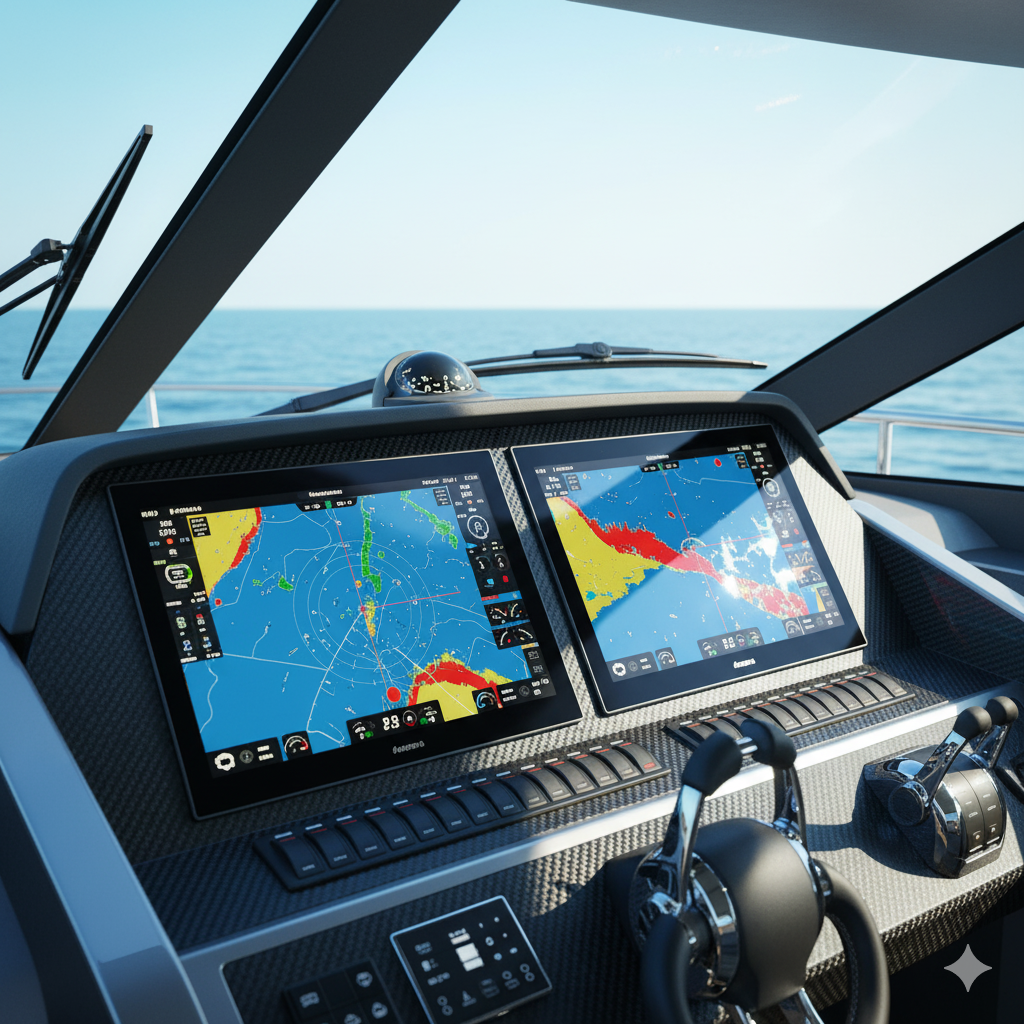
Modern GPS chartplotters integrate with sonar to give you real-time bottom composition and depth information overlaid on detailed charts. The key is having charts that actually reflect Great South Bay’s conditions, not generic mapping that misses the shallow spots and channel changes that happen seasonally.
The top chartplotter systems for 2026 offer touchscreen interfaces that remain responsive even with wet hands or while wearing polarized sunglasses. You need screens bright enough for Suffolk County, NY’s intense summer sun but with night modes that don’t destroy your vision when you’re navigating after sunset.
Processing speed matters when you’re switching between chart views, radar overlays, and sonar displays while managing a boat in traffic. Integration with autopilot systems transforms how you use a chartplotter. Instead of manually steering a course, you plot your route and let the systems work together. But this only functions properly when the marine electronics installation includes correct NMEA 2000 networking and proper sensor calibration.
Garmin marine dealer Long Island installations have dominated local waters because the interface makes sense to boaters who actually use their vessels. The Garmin GPSMAP 943xsv and 1243xsv models deliver excellent sonar expandability with displays sized appropriately for center console installations. These aren’t the largest screens available, but they’re the sweet spot for boats that fish Great South Bay and run out to Long Island Sound.
For larger vessels or those wanting flagship performance, the GPSMAP 9000 series offers ultra-high resolution displays with processing power that handles multiple data streams simultaneously. These systems integrate seamlessly with Garmin radar, sonar modules, boat autopilot installation, and engine data—creating a complete helm system you build around.
What matters most isn’t the screen size or resolution specs. It’s whether the installer understands how to position displays for visibility, route cables to prevent interference, and integrate the chartplotter with your other systems so everything communicates properly when you’re navigating Long Island Sound.
Long Island Sound’s diverse conditions demand sonar that performs reliably whether you’re in protected harbors or dealing with rough offshore conditions. The water ranges from shallow creeks to deep channels, and your marine electronics need to track accurately across that entire range.
CHIRP sonar technology has become the standard for professional marine electronics installation NY because it provides superior target separation and clarity compared to traditional sonar. Instead of sending a single frequency pulse, CHIRP sweeps through a range of frequencies, giving you much clearer images of bottom structure, fish, and underwater obstacles.
The integration between sonar and chartplotters creates a complete picture of what’s below your boat and where you are on the water. Modern systems overlay sonar data directly on your charts, so you can see depth changes, structure, and your position simultaneously.
This matters when you’re navigating Great South Bay’s channels or tracking depth through areas where shoaling changes seasonally. Transducer installation determines whether your sonar actually works as advertised. The transducer needs to be positioned for optimal performance based on your hull design and typical operating speeds. It must be mounted to withstand vibration while maintaining accurate readings.
Forward-facing sonar has reached resolution levels where you’re genuinely watching what’s ahead of your boat in real-time. For anglers fishing Nassau County, NY waters, this technology has been transformative. For cruisers navigating unfamiliar areas, it provides advance warning of bottom changes and obstacles before you’re on top of them.
Raymarine’s Element series with HyperVision technology delivers high-resolution imaging up to 100 feet, providing detail that helps you see structure and fish with exceptional clarity. The 1.2MHz frequency offers much higher resolution than conventional sonar—useful when you’re fishing Long Island Sound’s varied bottom structure or navigating areas where you need precise depth information.
Furuno’s TZtouch3 systems bring commercial-grade sonar accuracy to recreational vessels. These units support powerful CHIRP sonar with professional navigation tools that offshore anglers and serious cruisers rely on. The reputation comes from decades of commercial marine use where equipment failure isn’t acceptable.
The sonar system you choose matters less than whether it’s installed correctly and integrated properly with your chartplotter and other marine electronics. A mid-tier system installed professionally will outperform a flagship model installed poorly every single time.
Want live answers?
Connect with a Legacy Motors & Marine expert for fast, friendly support.
Radar isn’t optional equipment if you’re serious about boating in Long Island Sound. Fog, darkness, and crowded waterways make radar essential safety equipment, not a luxury add-on. The technology has evolved significantly, with solid-state radar offering instant-on capability and enhanced target resolution at close range.
Modern radar integrates directly with your chartplotter, overlaying radar returns on your charts so you see both mapped features and real-time targets simultaneously. This integration only works when the marine electronics installation includes proper networking and the installer knows how to calibrate the system for accurate overlay alignment.
Autopilot systems have advanced beyond simple course-holding to become sophisticated navigation tools that integrate with GPS, radar, and other sensors. The latest systems adapt to sea conditions automatically, making constant corrections that keep you on course more accurately than hand-steering.
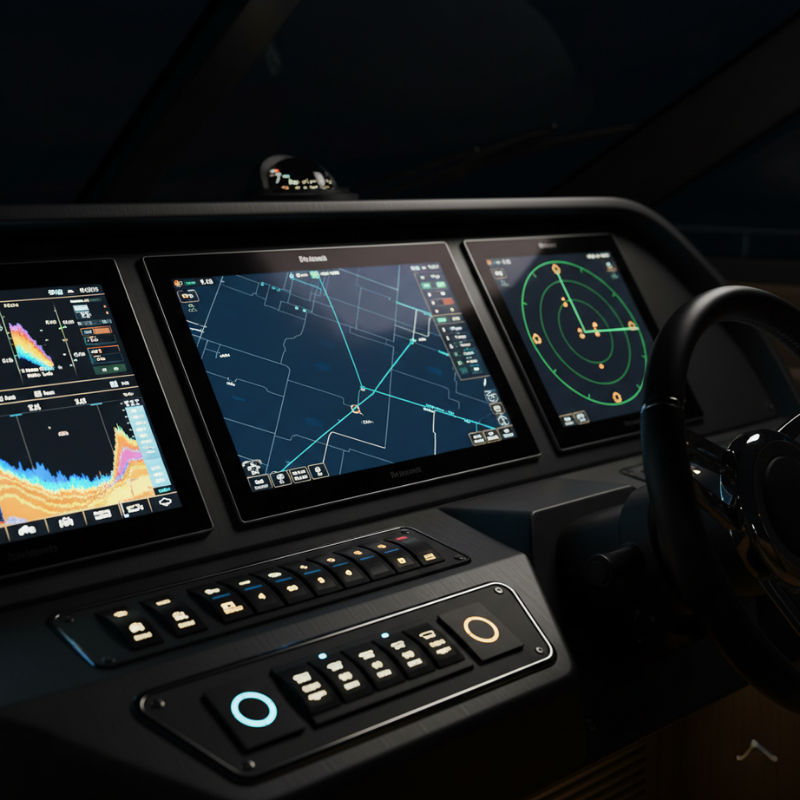
Boat autopilot installation separates amateur work from professional marine electronics expertise more clearly than any other system. Getting it right requires understanding hydraulic steering systems, proper sensor placement, NMEA 2000 integration, and calibration procedures that ensure the system performs reliably in Suffolk County, NY conditions.
The Garmin Reactor 40 has become the standard for center console installations because it delivers reliable performance with hydraulic steering systems common on 24-30 foot boats. Installation typically runs $1,000-$2,000 for labor plus $1,500-$4,000 for equipment depending on your steering configuration.
The wide cost range reflects installation complexity—some boats offer easy access to hydraulic lines and mounting locations, others require significant work to route hoses and position components. Raymarine’s Evolution autopilot systems use advanced sensor technology that doesn’t require rudder feedback sensors, simplifying installation while improving performance.
The installation process starts with mounting the hydraulic pump in a location that allows proper hose routing to your steering cylinder. Every connection must be made with marine-grade hydraulic hoses and fittings—automotive parts fail under marine vibration and corrosion. The system gets filled with hydraulic fluid, properly bled to remove air bubbles, and tested under load before calibration begins.
Sensor placement determines autopilot performance. The compass module must mount away from electromagnetic interference sources including speakers, batteries, VHF cables, and other electronics. It needs to be level and properly oriented. Get this wrong and your boat autopilot installation will never hold course accurately, no matter how much you paid for the equipment.
Integration with your chartplotter allows the autopilot to follow GPS routes, not just maintain a compass heading. This transforms long runs into relaxed cruises where you monitor systems instead of hand-steering for hours. But the integration only works when the NMEA 2000 network is installed correctly with proper termination and clean power.
Calibration takes time and expertise. The system needs to learn your boat’s steering characteristics through a series of maneuvers. We ensure proper calibration and performance verification before considering the job complete. DIY installations often skip this step, leaving you with an autopilot that wanders off course or over-corrects constantly.
The value of autopilot extends beyond convenience for Nassau County, NY boaters. It makes single-handed boating safer by freeing you to leave the helm for brief periods. It reduces fatigue on long runs, keeping you alert when you need to be. For Long Island boaters making regular runs between harbors or fishing specific structure, autopilot isn’t a luxury—it’s equipment that makes your time on the water more productive and enjoyable.
Marine audio systems Suffolk County installations face challenges that home or automotive audio never encounters. Constant spray, full submersion potential, intense UV exposure, and vibration destroy electronics not specifically designed for marine environments. The installation quality determines whether your audio system works for years or fails within a season.
Marine-grade components use completely waterproof construction with sealed connections that survive coastal conditions. Speakers, amplifiers, head units, and wiring all require marine-specific designs—not weather-resistant automotive parts that manufacturers claim work on boats.
The difference becomes obvious after one season of saltwater exposure in Nassau County, NY. Modern marine audio systems integrate with your helm displays, allowing control through your chartplotter touchscreen instead of requiring separate head units that clutter your dash.
Fusion audio systems have become the standard for integrated installations, offering multi-zone control, wireless connectivity, and integration with major chartplotter brands. Installation requires more than mounting speakers and running wires. Each component needs proper electrical protection through correctly sized fuses and circuit breakers.
Amplifiers require adequate ventilation and secure mounting that withstands vibration. Speaker locations must provide good sound coverage while avoiding spray zones that would destroy even marine-grade components over time. Wire management matters enormously for marine audio systems Suffolk County installations.
Every connection point gets marine-grade terminals, heat shrink tubing, and dielectric grease. Wires route away from interference sources and get secured against vibration with proper clips and ties. Labels identify each circuit for future troubleshooting or upgrades. These details separate installations that work from those that fail after one season.
Power management becomes critical when adding audio systems to boats with existing marine electronics. Your battery capacity needs to support the additional draw without compromising navigation and safety equipment. Proper installations include dedicated circuits with appropriate fusing, and many benefit from adding a second battery with proper isolation to ensure you can always start your engine.
The Long Island boating community reports consistent frustration with audio installers who take months to complete simple upgrades or never respond after initial contact. This timing problem gets worse during spring when everyone wants their boat ready for summer. Finding installers who actually respond, provide realistic timelines, and complete work professionally has become a significant challenge.
Integration with modern marine electronics creates audio systems that enhance your boating experience without creating operational complexity. You control everything from the same touchscreen you use for navigation, with zone controls that let you adjust volume in different areas independently.
The investment in professional marine audio systems Suffolk County installation protects your equipment and delivers performance that lasts. Cheap installations using automotive techniques might work initially, but they fail when exposed to the marine environment Suffolk County, NY boaters face every time they leave the dock.
The marine electronics you choose matter less than the installation quality that makes them reliable. A mid-tier Garmin or Raymarine system installed professionally will serve you better than flagship equipment installed poorly. The difference shows up when you’re navigating Great South Bay in fog or tracking depth through Long Island Sound’s channels—your marine electronics either work reliably or they fail when you need them most.
Professional marine electronics installation NY uses marine-grade materials, proper integration techniques, and installation standards that protect your investment against coastal environments. The timing matters too. Spring installation schedules fill quickly as everyone prepares for summer, and waiting until May often means your boat isn’t ready until August.
The boaters who enjoy their time on the water most are those whose electronics work reliably, integrate seamlessly, and were installed by professionals who understand marine environments in Nassau County, NY and Suffolk County, NY. If you’re ready to upgrade your navigation systems before the summer rush, we bring the same precision and attention to detail to marine electronics installation that protects high-value assets throughout the region.
Article details:
Share:
Continue learning: