
Most Long Island boats go into storage with more damage waiting to happen than their owners realize. Here's what proper fall boat cleaning actually looks like.
Share:
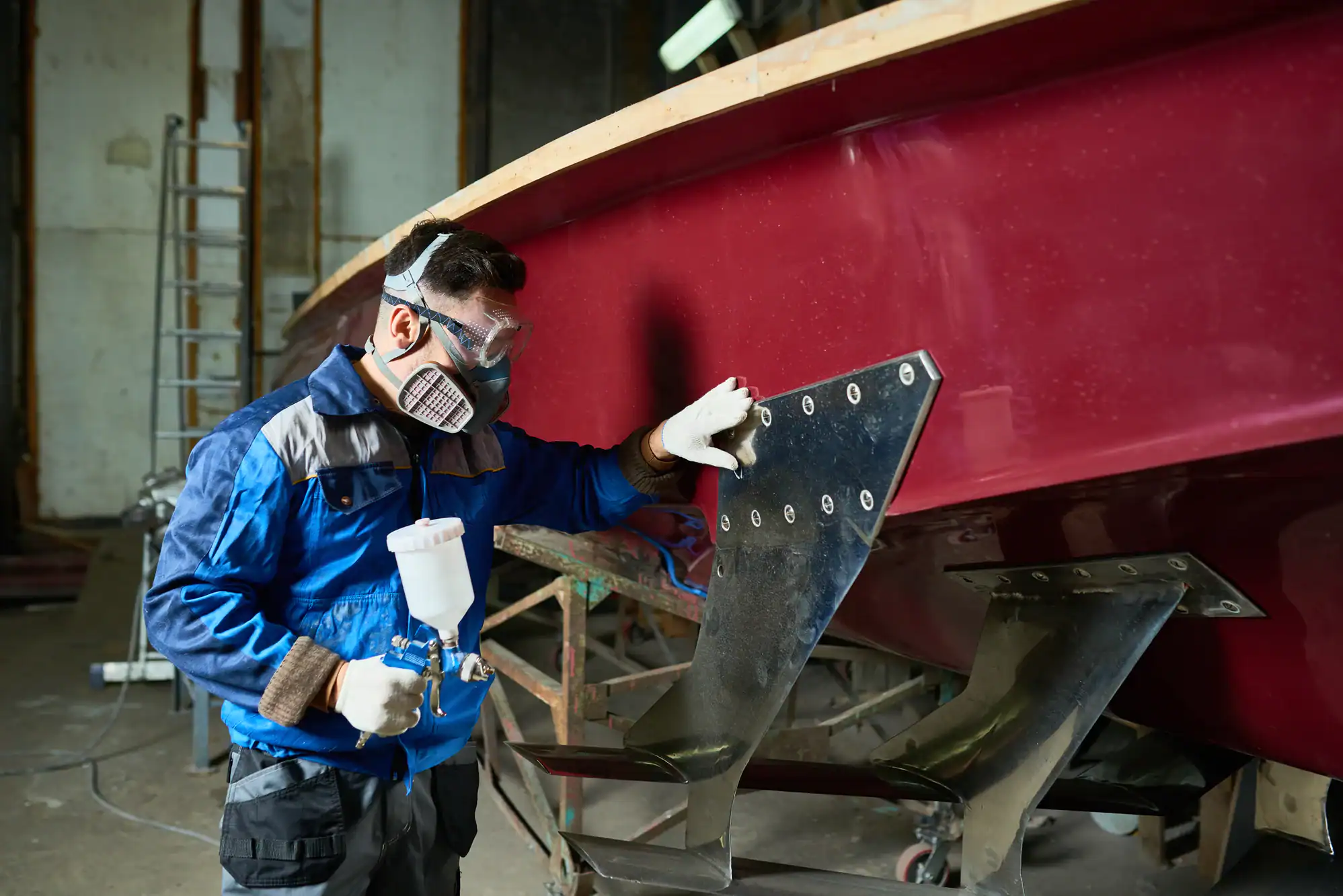
Summary:
Most Long Island boaters pull their boats out of the water somewhere between late September and mid-October. Some get a professional detail done first. Most don’t — not because they don’t care, but because the end of season sneaks up on them and suddenly the boat is already in the yard.
The problem is that everything you skip in the fall compounds over winter. Salt, biological growth, and moisture don’t pause while your boat is in storage. They keep working. What could be addressed in an hour in October can turn into a real problem by March.
This checklist covers what a thorough pre-storage boat cleaning actually involves — and why it matters more here on Long Island than in most other boating markets.
The hull is where most of the season’s damage accumulates, and it’s the area most boat owners underestimate when they’re doing their own fall prep. A rinse with fresh water handles loose debris. It doesn’t handle what’s actually causing the damage.
Long Island Sound and the surrounding saltwater bodies — Great South Bay, Peconic Bay, the Atlantic — leave salt crystals embedded in gel coat surfaces after every outing. Those crystals don’t just sit there. They absorb atmospheric moisture and continue to cause micro-abrasion and corrosion throughout the winter, even when the boat is completely out of the water. A proper hull cleaning removes that salt at a level a garden hose can’t reach.

The waterline is the most telling part of any boat that’s spent a summer in Long Island’s waters. Biological growth, mineral deposits, and general grime accumulate right at the water’s edge all season long, and by September that line is usually visible from twenty feet away.
The thing most boat owners don’t know is that waterline staining has a shelf life for treatment. An acid-formulated hull cleaner applied in October can remove staining that took all summer to build up. That same staining, left untreated through a Long Island winter, chemically bonds to the gel coat. By the time you’re launching in April, what was a straightforward cleaning job has become a restoration project — if it’s fixable at all.
This is one of the most common spring surprises we see from boats that were stored without proper hull cleaning. The stain didn’t get worse because of anything that happened over winter. It got worse because nothing happened — and the window to treat it closed months earlier.
Proper hull cleaning at the pre-storage stage involves more than scrubbing. The waterline gets treated with an acid cleaner specifically formulated for fiberglass — not a general-purpose cleaner, not something borrowed from the auto supply shelf. Then the hull gets inspected for oxidation. If the gel coat has started to chalk or fade, that gets addressed with a marine-grade compound before any protective coating goes on. Skipping the compounding step and going straight to wax is like painting over rust. The surface looks fine for a while, and then it doesn’t.
For boats that have been in the water all season on the North Shore — moored in Port Jefferson Harbor or anchored off Lloyd Neck, for example — there’s often biological fouling below the waterline as well. Algae and other marine growth attach during the warmer months and need to be fully removed before storage. Left in place under a shrink wrap, that material continues to degrade the hull surface and creates conditions for mold to take hold.
The bottom line on hull cleaning is that it’s a multi-step process with a specific sequence, specific chemistry, and real consequences if it’s rushed or skipped. The boats that come out of storage looking like they just left the dealer are the ones where this work was done properly in the fall.
Shrink wrapping is standard practice for outdoor winter storage on Long Island, and it does its job well — it keeps snow, rain, and UV exposure off the boat for the duration of the off-season. But there’s a widespread misconception about what shrink wrap actually does, and it leads to one of the most avoidable storage mistakes out there.
Shrink wrap seals the exterior of your boat. That means it also seals in whatever is already on the surface. Salt deposits, biological material, moisture trapped in crevices, waterline staining — all of it gets locked against the hull for four to six months. A dirty boat under shrink wrap isn’t a protected boat. It’s a sealed environment where the damage keeps going, uninterrupted, until spring.
This is why pre-storage cleaning is a prerequisite for effective shrink wrap protection, not an alternative to it. The wrap does its job only when the surface underneath is properly prepared. Get the hull clean, treated, and protected first — then wrap it.
The same logic applies to indoor storage. Climate-controlled indoor storage reduces the environmental stressors significantly — no freeze-thaw exposure, no humidity swings, no UV. But climate control doesn’t neutralize salt that’s already embedded in the gel coat or moisture that’s already inside the cabin. The storage environment protects a clean boat. It doesn’t undo the damage from skipping the cleaning step.
We always recommend arriving with the boat already detailed — or scheduling the detail as part of the intake process. A boat that goes into climate-controlled storage clean and properly treated is in genuinely better condition in May than the day it arrived. A boat that goes in with a season’s worth of salt and biological growth on it is just storing that damage at a stable temperature.
The fall cleaning window on Long Island is short. Most boats come out of the water in a compressed window from late September through October. Quality detailing appointments fill up weeks ahead of that. If you’re planning to have the work done properly, August is the time to think about it — not the week before your marina pulls the boat.
Want live answers?
Connect with a Legacy Motors & Marine expert for fast, friendly support.
There’s a persistent debate among boat owners about whether to wax before storage or wait until spring. The short answer: before. The reasoning is straightforward once you understand what wax actually does.
Marine wax creates a protective barrier between the gel coat and everything that wants to degrade it — UV exposure, salt, oxidation, moisture. Applying it before storage means that barrier is in place during the most vulnerable period: the months when the boat is sitting still and you’re not watching it. Waiting until spring means the gel coat spent the entire winter with no protection at all.
Standard polymer sealants typically last three to four months. Premium marine-grade options extend that to six to twelve months. Either way, the wax you apply in October is still working when you launch in May.
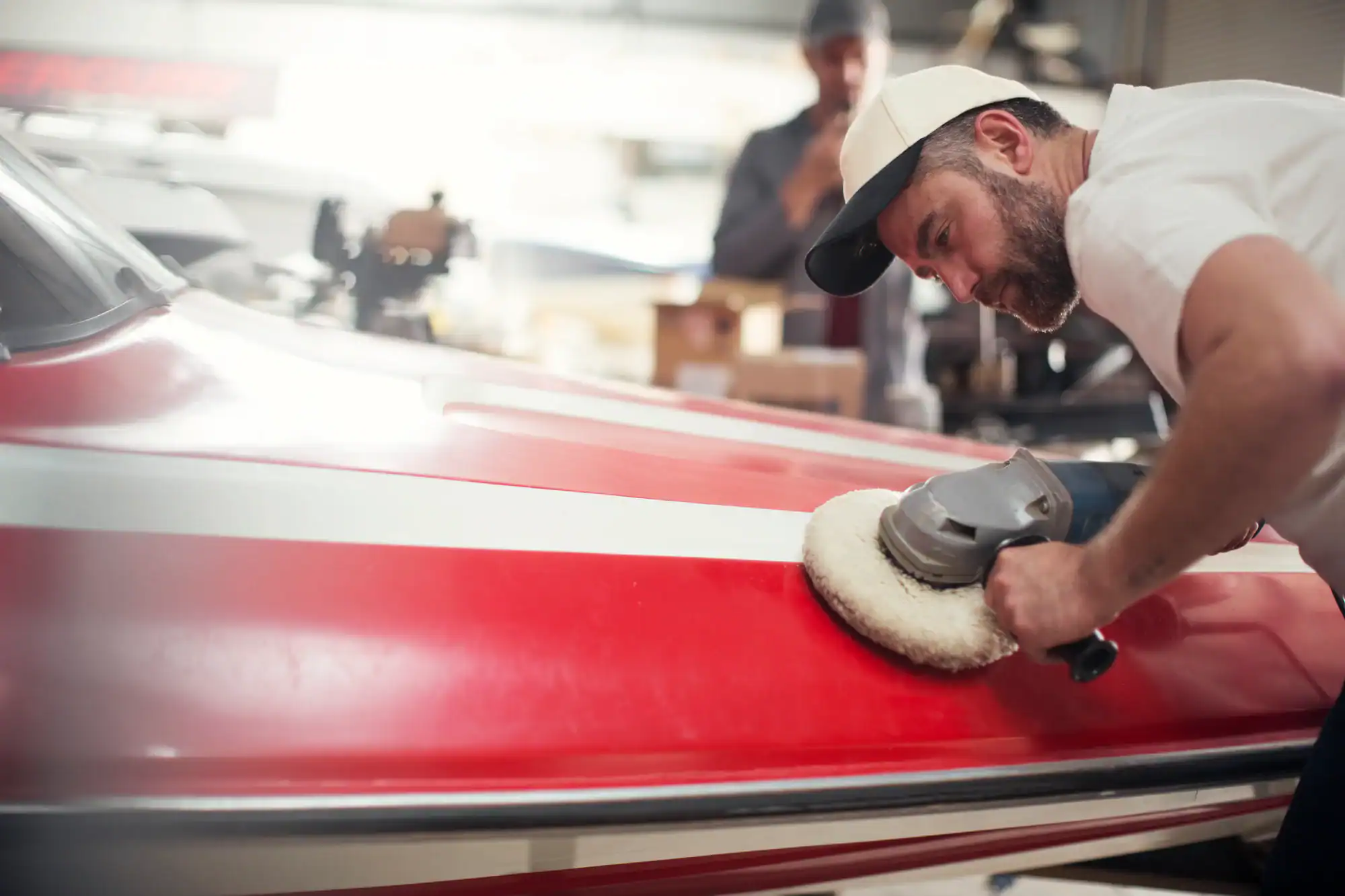
This comes up constantly, and the answer is no — not if you want to protect the surface rather than damage it over time.
Automotive wax is formulated for painted metal surfaces. Marine gel coat is a different material entirely, with different chemistry, different porosity, and different vulnerabilities. Automotive wax applied to gel coat can strip existing protective coatings, leave a surface that looks fine initially but degrades faster than untreated gel coat, and in some cases cause the kind of surface hazing that requires compounding to correct.
Marine-specific wax products are formulated for the pH and surface characteristics of gel coat. They’re also designed to handle the specific stressors boats face — prolonged UV exposure, saltwater contact, temperature cycling — in ways that automotive products aren’t. The difference isn’t subtle over time. Boats that have been maintained with marine-appropriate products hold their finish significantly longer than boats where automotive products were used as a shortcut.
The same principle applies to the cleaning products used before waxing. Household detergents and general-purpose cleaners strip protective coatings from gel coat surfaces. pH-balanced marine soaps clean effectively without breaking down the wax layer underneath. If you’re doing your own fall cleaning, the product selection matters as much as the effort you put in.
For the wax application itself, the process is: wash the hull with a pH-neutral marine soap, compound any areas showing oxidation or chalking, then apply the wax in sections and buff it out. Trying to wax over oxidized gel coat without compounding first is a common mistake — the wax sits on top of the degraded surface rather than bonding to it, and the protection is minimal. The compounding step takes time, but it’s what separates a boat that looks good for one season from one that holds its finish for years.
One more thing worth mentioning: the nonskid deck surfaces require different treatment than the hull. They shouldn’t be waxed — wax on nonskid makes it slippery, which is both useless and a safety issue. Those surfaces get cleaned and treated with a product specifically designed for textured deck materials.
Exterior hull cleaning and waxing get most of the attention in fall prep conversations, but the interior of a stored boat is where the real damage often shows up in spring. Mold and mildew growth inside a stored boat is one of the most common — and most preventable — outcomes of incomplete pre-storage cleaning.
Long Island’s coastal humidity creates near-ideal conditions for mold growth inside an enclosed, unventilated space. A boat cabin that goes into storage with any residual moisture — in the bilge, in the upholstery, in the carpet, in the headliner — will almost certainly have a mold problem by April. The smell alone is enough to ruin a spring launch. The remediation cost is worse.
Proper interior marine detailing before storage addresses this systematically. The bilge gets cleaned and treated for odor. Vinyl surfaces get cleaned and treated with a UV protectant that also inhibits mold growth — this matters even in indoor storage, because vinyl that dries out and cracks over winter is expensive to replace. Canvas and isinglass windows require dedicated cleaning products; using the wrong cleaner on isinglass causes permanent hazing. All moisture sources get identified and addressed before the boat is sealed up.
Teak surfaces — common on Long Island’s larger cruisers and sportfish boats — need to be cleaned and conditioned before storage as well. Teak that goes into storage dry and untreated can crack and gray significantly over the winter. A proper teak cleaner removes the oxidized surface layer, and a teak sealer applied afterward protects the wood through the off-season.
The interior detail is also when you want to remove any electronics or gear that shouldn’t winter in the boat — portable fish finders, handheld VHF radios, anything with batteries that can corrode. For fixed marine electronics like chartplotters and depth sounders, the connections and terminals should be inspected and treated for corrosion. Saltwater spray works its way into connector housings over a full season, and corroded terminals are one of the most common causes of electronics failures at spring launch. It’s a five-minute fix in October and a frustrating diagnostic problem in May.
This is one area where professional marine detailing goes beyond what most boat owners cover in a DIY session. The full scope of interior pre-storage prep — bilge, vinyl, canvas, teak, electronics, moisture control — takes several hours on a mid-size cruiser and requires products and techniques specific to each surface. Getting it right means your boat is genuinely ready to use in spring, not just covered and stored.
The boats that come out of winter storage in the best shape aren’t the ones that got lucky. They’re the ones where the fall prep was done thoroughly — hull cleaned and waxed, waterline treated, interior dried out and protected, everything sealed up properly before the cover went on.
On Long Island, where boats spend four to five months in saltwater before coming out for the season, that prep matters more than it does in most other markets. The combination of salt exposure, coastal humidity, and freeze-thaw cycling means the off-season is genuinely hard on vessels that aren’t properly prepared. It’s also a long time to leave a problem untreated.
If you want your boat detailed and stored before the fall rush fills up the schedule, we handle the full pre-storage sequence from our Port Jefferson Station facility — marine detailing, climate-controlled indoor storage, battery tender hookup, and optional maintenance checks. Reach out before the September scramble starts.
Article details:
Share:
Continue learning: